
This content was aggregated from local dealer data and insights provided by the USA Today Network Automotive Insights team using Google Gemini and the Vehicles For Sale Near West Palm Beach marketplace writing team.
For Treasure Coast drivers who routinely rack up miles, the Honda CR-V Hybrid presents an appealing formula: compact-SUV versatility paired with an electrified powertrain designed to reduce fuel consumption, particularly in everyday stop-and-go driving. That combination can make the CR-V Hybrid especially interesting for commuters traveling around Stuart or making longer runs along Florida’s Atlantic coast. The real value question, however, is whether the hybrid’s benefits and higher-level trim features justify its cost compared with other CR-V configurations.
Because final U.S.-market specifications, EPA estimates, trim equipment, and pricing can change by model year, shoppers considering a 2027 model should verify those details against Honda’s final 2027 documentation before purchasing.
The CR-V has long occupied the practical middle ground of the compact-SUV market: large enough for passengers, groceries, luggage, and weekend gear without becoming cumbersome for daily driving. The hybrid version adds another consideration for high-mileage drivers—the opportunity to use less gasoline without having to plug the vehicle in.
Honda's current-generation CR-V Hybrid uses a two-motor hybrid system built around a 2.0-liter four-cylinder gasoline engine. In recent U.S. versions, the system has produced 204 total system horsepower, providing substantially more than a fuel-economy-only proposition. Its electric-motor assistance also contributes to responsive acceleration during everyday driving.
That matters on the Treasure Coast. A driver who spends the week making short trips around Stuart but also travels regularly on I-95, Florida’s Turnpike, or US-1 needs a vehicle capable of handling both low-speed traffic and sustained highway miles comfortably.
The hybrid system requires no external charging. Energy is managed automatically through the gasoline engine, electric motors, and regenerative braking system. For buyers who like the idea of electrification but cannot—or simply do not want to—build their routine around charging, that simplicity is a significant part of the CR-V Hybrid’s value proposition.
For frequent drivers, however, purchase price should not be viewed in isolation. A useful comparison considers the hybrid premium, expected annual mileage, the proportion of city versus highway driving, fuel prices, equipment differences, and how long the vehicle will be kept.
A driver covering 18,000 miles annually, for example, has a very different value equation from someone driving only 6,000 miles a year.
The CR-V Hybrid's biggest mechanical attraction is the way Honda's two-motor hybrid system blends electric propulsion with gasoline power. Electric assistance can make lower-speed response feel immediate, while the gasoline engine and hybrid system support longer-distance driving without charging stops.
Recent CR-V Hybrid models have combined a 2.0-liter Atkinson-cycle four-cylinder engine with Honda's two-motor hybrid system, producing 204 system horsepower. Buyers should confirm that specification for the final 2027 model before purchase.
Fuel economy is potentially more important for Treasure Coast commuters. Recent front-wheel-drive CR-V Hybrid configurations have achieved EPA estimates around 40 mpg combined, while all-wheel-drive versions have generally returned lower figures. Exact ratings depend on configuration and model year, so the official 2027 EPA figures should be used when calculating prospective fuel savings.
The CR-V also emphasizes everyday practicality. Current-generation models provide seating for five, a flexible rear seating area, and substantial cargo room behind the second row. That makes the vehicle useful beyond commuting: beach equipment, golf clubs, groceries, luggage, and other weekend gear do not require moving up to a substantially larger SUV.
Technology and convenience equipment vary by trim, but recent CR-V models have offered features such as smartphone integration, touchscreen infotainment, available wireless phone connectivity and charging, heated front seats, power-adjustable seating, leather-trimmed upholstery on upper configurations, and upgraded audio and navigation-related technology on higher trims.
Honda also equips the CR-V family with the Honda Sensing suite of driver-assistance technologies. Depending on final 2027 specifications, shoppers should look for features such as Collision Mitigation Braking System, Road Departure Mitigation System, Adaptive Cruise Control with Low-Speed Follow, and Lane Keeping Assist System.
For someone regularly traveling longer highway stretches, adaptive cruise control and lane-support technology can be particularly relevant. They do not replace attentive driving, but they can reduce some of the repetitive workload associated with long commutes.
The most important question is not simply whether the CR-V Hybrid is efficient. It is which version delivers the right amount of equipment without paying for features you will rarely use.
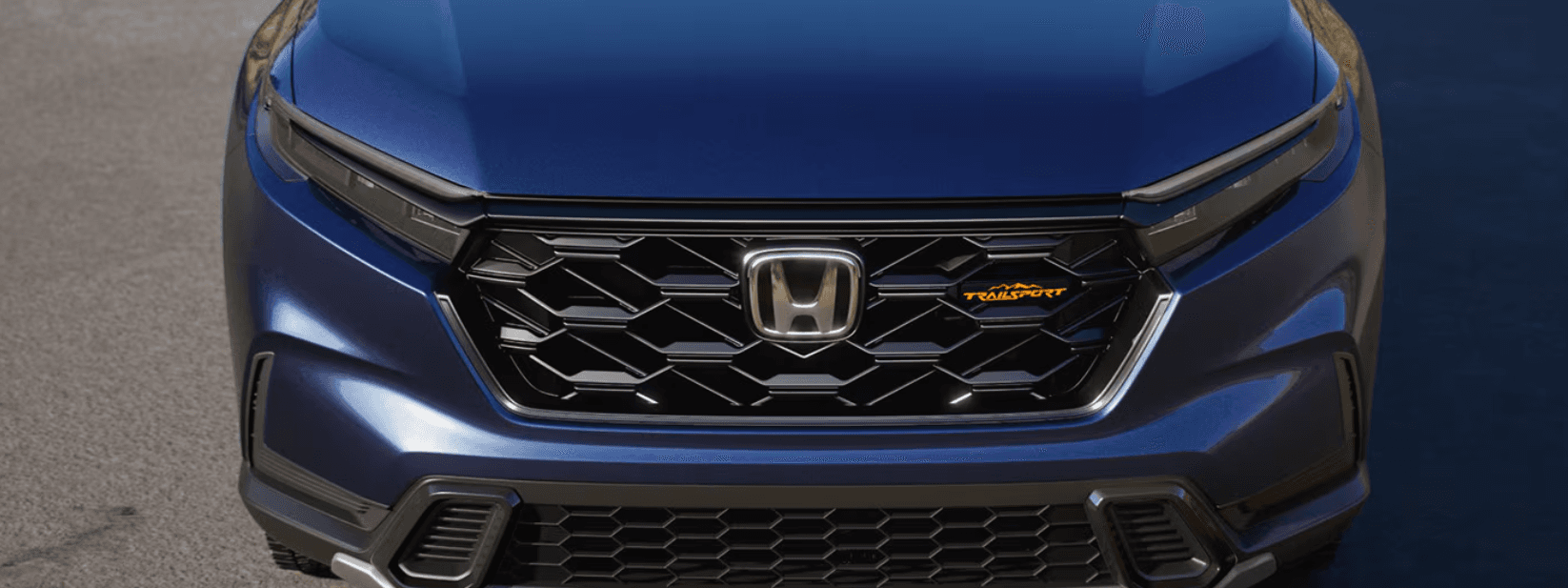
Honda has offered the current-generation hybrid CR-V in multiple configurations, including Sport-oriented trims and premium variants such as Sport-L and Sport Touring, with the precise lineup changing over time. Honda has also expanded the CR-V family with more adventure-oriented equipment in recent model years.
For a value-focused commuter, the entry point into the hybrid lineup is often worth examining first. It provides access to the central feature that differentiates the vehicle—the hybrid powertrain—without automatically moving into the most expensive luxury and technology package.
Moving higher in the range can add meaningful comfort features. A commuter spending an hour or more in the vehicle every day may place greater value on upgraded seating materials, power seat adjustments, additional convenience technology, a premium audio system, or other cabin upgrades than a low-mileage owner would.
At the upper end, the decision becomes less about fuel savings alone. Buyers are paying for a combination of electrification, comfort, technology, and—in configurations where it is fitted—additional drivetrain capability.
Start with the expected number of miles driven each year. Then compare the final 2027 hybrid MSRP against the equivalent non-hybrid CR-V you would realistically purchase—not necessarily the least expensive CR-V available.
Next, estimate annual fuel use using official EPA combined ratings:
Annual fuel use = annual miles ÷ combined MPG
Multiplying that figure by your expected average fuel price gives a basic annual fuel-cost estimate.
For example, the difference between a hypothetical vehicle returning 30 mpg and one returning 40 mpg becomes increasingly meaningful as annual mileage rises. At 15,000 miles per year, the 30-mpg vehicle would consume about 500 gallons, while the 40-mpg vehicle would consume about 375 gallons—a difference of roughly 125 gallons annually.
That example is purely illustrative rather than a statement of final 2027 CR-V ratings. Insurance, financing, maintenance, depreciation, trim equipment, drivetrain, and real-world driving conditions should also be included in a complete ownership-cost comparison.
The result is that the CR-V Hybrid tends to make the strongest financial case for shoppers who drive enough miles to benefit meaningfully from improved efficiency and who already value the equipment included with the hybrid trim they are considering.
Stuart is a particularly logical environment in which to consider a hybrid SUV because driving patterns can vary dramatically within a single week.
Local errands can mean repeated starts, stops, and lower-speed driving. Hybrid systems are well suited to this environment because they can recover energy during deceleration through regenerative braking and use electric propulsion under appropriate conditions.
Longer Treasure Coast trips introduce a different equation. Drivers traveling south toward Palm Beach County or north toward Port St. Lucie, Fort Pierce, and beyond may spend much more time at highway speeds. Hybrids still provide efficiency benefits, but the advantage is generally more pronounced in lower-speed and mixed driving than during uninterrupted high-speed cruising.
Florida weather also shapes the ownership experience. Air conditioning is an everyday necessity for much of the year, and real-world fuel economy can differ from EPA test results depending on climate-control use, speed, traffic, payload, tire pressure, and driving style.
Heavy seasonal rain is another consideration. Buyers may be attracted to all-wheel drive for additional traction under certain conditions, although AWD does not shorten braking distances or eliminate the need to reduce speed on wet roads. Drivers should also remember that Florida's generally flat terrain means ground clearance and AWD needs differ from those of buyers routinely encountering snow or steep mountain roads.
For frequent commuters, cabin comfort may ultimately matter almost as much as fuel economy. Seat support, climate control, visibility, phone integration, adaptive cruise control, cargo flexibility, and cabin noise are features experienced every single day. A thorough test drive should therefore include both local streets and highway-speed driving whenever possible.
For the right buyer, the Honda CR-V Hybrid's strongest argument is its balance. It offers SUV practicality and conventional refueling while using hybrid technology to reduce fuel consumption. Drivers covering substantial annual mileage have the greatest reason to calculate whether those fuel savings justify the hybrid's price difference.
Potentially, especially for drivers whose commute combines local traffic with highway travel. The CR-V Hybrid's two-motor hybrid approach can reduce fuel consumption compared with a conventional gasoline vehicle, while the compact-SUV body provides useful passenger and cargo space. Compare final 2027 EPA ratings and pricing before calculating your expected savings.
No. The CR-V Hybrid is a conventional hybrid rather than a plug-in hybrid. Its gasoline engine, electric motors, battery, and regenerative braking system manage energy automatically. That means a Stuart commuter can refuel at a normal gas station without installing a home charger or planning trips around public charging infrastructure.
Front-wheel drive may appeal to efficiency-focused drivers, while available all-wheel drive can provide additional traction in some conditions. Stuart's flat, warm-weather environment does not create the same AWD demands as snowy regions. Regardless of drivetrain, proper tires and appropriately reduced speeds remain particularly important during Florida's heavy rain.
It depends on annual mileage, the vehicle being compared, fuel prices, drivetrain, and real-world efficiency. As an illustration, improving from 30 mpg to 40 mpg over 15,000 miles reduces annual fuel consumption from about 500 to 375 gallons. Use the final 2027 EPA ratings—not this example—to estimate actual CR-V savings.
There is no universal answer. Commuters primarily interested in lowering fuel use may find an entry hybrid configuration most compelling, while drivers spending substantial time behind the wheel may value the comfort and technology offered by higher trims. Compare final 2027 standard equipment and MSRP trim by trim before deciding which upgrades justify their additional cost.
The best way to determine whether the CR-V Hybrid fits your Treasure Coast routine is to compare available configurations, equipment, and pricing while considering how many miles you drive each year.
Browse current 2027 Honda CR-V Hybrid for sale near Stuart listings to compare available vehicles and configurations.
You can also visit the Johnson Honda of Stuart dealer profile for dealership information and additional shopping resources.
Written for http://vehiclesforsalenearwestpalmbeach.com/
By the USA TODAY Network Automotive Insights Team, in collaboration with Johnson Honda of Stuart and the Vehicles For Sale Near West Palm Beach - The Palm Beach Post.
Disclaimer: This article's content is intended for informational purposes only. Vehicle specifications and features are based on data provided by J.D. Power and local dealerships and may vary by individual vehicle, VIN, trim, configuration, packages, and optional equipment. Vehicle images may not depict the exact model, trim, features, packages, accessories, or specifications described. Vehicle pricing, availability, features, and specifications are subject to change without notice. Please reference the dealership's vehicle listing and window sticker or consult the dealership directly for complete and accurate details.